


WPA feature on:
Accoya takes on the elements

Accoya takes on the elements in the ultimate test of durability
When wood is to be used outdoors in contact with the ground or fresh water and exposed to prolonged wetting and temperature changes, its durability is essential to the long-term performance and safety of the project it is part of. The modified wood brand Accoya is increasingly being specified for construction projects that call for a proven BS EN 335 Use Class 4 (UC4) durability performance.
In this WPA blog, we take a look at what lies behind the ability of Accoya to take on the elements and earn its reputation as robust option for these applications.
WPA feature on:
Early post failure investigation
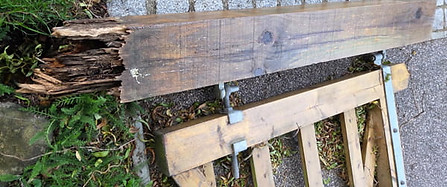
WPA investigates early failure of preservative treated gate posts
When four square sawn preservative treated softwood gate posts, installed in mid-2021, started to decay prematurely, the Association of Fencing Industries (AFI) contractor who installed them asked the Wood Protection Association (WPA) to investigate what went wrong.
These large cross section posts were set 600mm deep and held in place by concrete. They supported field gates and the contractor confirmed that they were intended to achieve the 15-year service life specified in the wood preservation code of practice, and BS8417 for preservative impregnated wood in Use Class 4 (direct ground contact) conditions.
WPA feature on:
wood protection engineering

“In any discussion about the performance of pre-treated wood, preservative efficacy is often the only topic of conversation,” says WPA Chairman Steve Young. “The reality is far more complex - well documented factory production controls are essential - and pre-conditioning, preservative impregnation or wood modification plant and equipment manufacturers have a vital role to play as a wood protection formulation is only as effective as the plant designed to use it.”
In this article, the WPA turns the spotlight on two member businesses that are internationally reknown for their wood protection engineering expertise -Timber Treatment Solutions (TTS), based in the UK and Wood Treatment Technologies (WTT) based in Denmark.
WPA feature on:
How Tanasote is taking wood preservation into a new era

When Tanasote won the Wood Protection Association (WPA) annual award for innovation in 2021, it marked an important moment for the future of industrial wood preservation. Developed by the R&D scientists of Arxada to offer infrastructure organisations a credible alternative to coal tar creosote, Tanasote arrived at a time when power and telecommunications network operators were looking to justify why they should continue to invest in the continued use of wood or move to alternative man-made materials.
In 2026, that story has become even more relevant. Across the infrastructure sector, wood poles continue to be valued for their ease of installation and service use, cost-effectiveness and environmental advantages, with service life confidence delivered by a proven industrial pre-treatment.
WPA feature on:
unknowingly wasting paint

Why joiner manufacturers may unknowingly be wasting paint
Paint costs are a significant part of finishing budgets for joinery manufacturers. And many businesses are looking for ways to improve efficiency without compromising finish quality or long-term performance.
One area which is often overlooked is paint consumption during application. In practice, many manufacturers are using more paint than is required, without questioning it.
In this blog, WPA member Teknos explains the technicalities of this issue: